Travel Credit Card vs. Prepaid Travel Card: Which Is Better?
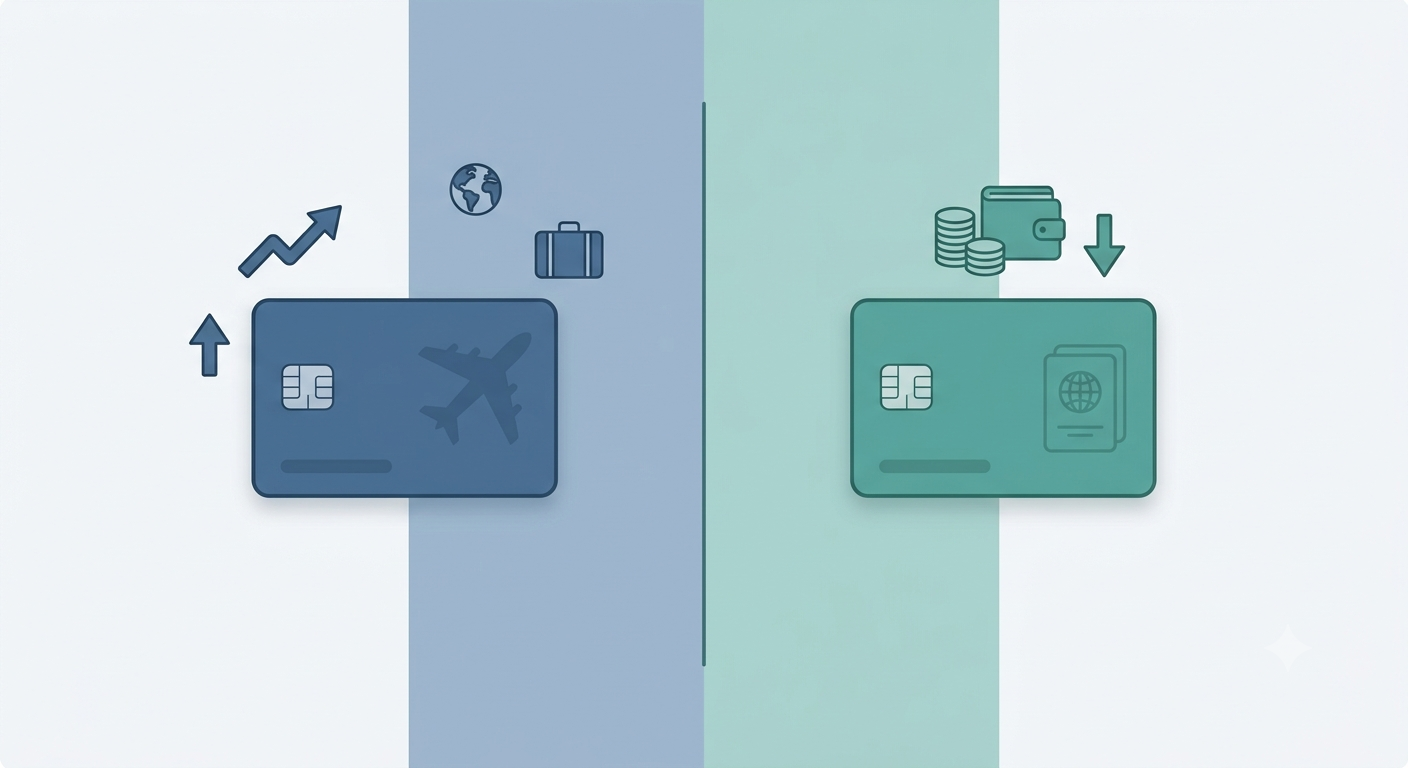
Choosing between a travel credit card and a prepaid travel card can make a significant difference in how you pay for an international trip. A travel credit card vs prepaid card comparison usually comes down to rewards, fees, spending control, credit requirements and how you plan to use the card abroad.
Travel credit cards can offer points, miles and valuable travel benefits. Prepaid travel cards, on the other hand, allow you to load a specific amount of money before traveling and can make it easier to control your spending.
Neither option is automatically better for everyone.
The right choice depends on your financial situation, travel habits and whether you want to borrow money or spend only the funds you have already loaded.
Travel Credit Card vs Prepaid Card: Main Differences
The biggest difference between a travel credit card and a prepaid travel card is how the money works.
| Feature | Travel Credit Card | Prepaid Travel Card |
|---|---|---|
| Uses borrowed credit | Yes | No |
| Requires approval | Usually | Usually not |
| Can build credit | Yes | No |
| Earns rewards | Often | Sometimes, depending on the card |
| Spending limit | Credit limit | Amount loaded |
| Interest charges | Possible | Usually no interest |
| Foreign transaction fees | Depends on card | Depends on card |
| Risk of debt | Yes | No |
| Requires a credit check | Often | Usually not |
A travel credit card offers access to a revolving line of credit. A prepaid card uses money that has already been loaded onto the account.
What Is a Travel Credit Card?
A travel credit card is a traditional credit card designed to offer rewards and benefits related to travel.
Depending on the card, you may earn:
- Airline miles.
- Flexible travel points.
- Hotel rewards.
- Cash back.
- Bonus rewards on travel purchases.
Some travel cards also offer benefits such as:
- No foreign transaction fees.
- Travel insurance.
- Airport lounge access.
- Rental car protections.
- Global Entry or TSA PreCheck credits.
You can read more about avoiding international fees in our guide to How to Use Your Credit Card Abroad Without Hidden Fees.
When you use a travel credit card, the card issuer pays the merchant. You then repay the issuer according to your credit card agreement.
If you pay the statement balance in full, you may avoid interest on purchases, depending on the card’s terms.
What Is a Prepaid Travel Card?
A prepaid travel card allows you to load money onto the card before using it.
For example, you might load:
- $500.
- $1,000.
- $2,000.
You can then use the available balance for eligible purchases.
Once the balance is used, you generally need to add more money before continuing to spend.
A prepaid card does not usually function as a traditional line of credit.
That means you are spending money that has already been loaded onto the card.
Travel Credit Card vs Prepaid Card: Which Is Better for Spending Control?
A prepaid travel card usually offers better spending control.
You can load a specific amount before your trip and use that balance as your spending limit.
For example, if you load $1,500, you generally cannot spend more than the available balance.
This can be useful if:
- You want to stick to a travel budget.
- You do not want to borrow money.
- You are worried about overspending.
- You want to separate travel money from your main bank account.
A travel credit card offers more flexibility, but that flexibility can also make it easier to spend more than you originally planned.
Winner: Prepaid travel card
For strict spending control, a prepaid card is usually the simpler option.
Which Card Is Better for Building Credit?
A travel credit card is generally better for building credit.
Credit card activity can be reported to the major credit bureaus.
Responsible use can potentially help you build a positive credit history over time.
Important habits include:
- Paying on time.
- Keeping balances manageable.
- Avoiding excessive credit utilization.
A prepaid travel card typically does not function as a traditional credit account.
As a result, using one generally does not help build your credit history in the same way as a credit card.
Winner: Travel credit card
If building or improving your credit is one of your goals, a traditional credit card may be the better choice.
Which Option Is Better for People With No Credit?
A prepaid travel card may be easier to obtain because it generally does not require the same type of credit approval as a traditional credit card.
This can make it appealing to:
- People with no credit history.
- People with limited credit.
- Travelers who do not want a credit check.
- People who have been denied traditional credit cards.
However, some credit cards are specifically designed for people with limited or no credit.
If you are 18 or older and meet the issuer’s requirements, you may qualify for certain starter credit cards.
You can also read our guide to the Best Credit Cards for 18-Year-Olds.
Winner: Prepaid travel card for easier access
A prepaid card is generally simpler to obtain, although certain starter credit cards may also be available.
Which Card Offers Better Travel Rewards?
Travel credit cards usually have the advantage when it comes to rewards.
Depending on the card, you may earn:
- Points on flights.
- Miles on hotel purchases.
- Bonus rewards on restaurants.
- Rewards on everyday purchases.
Some cards also offer valuable welcome bonuses.
For example, a card may offer a large number of points after you meet a minimum spending requirement during the first few months.
Prepaid travel cards may offer rewards, but their programs are often less extensive than those available from major travel credit cards.
Winner: Travel credit card
If earning airline miles, hotel points or flexible travel rewards is important to you, a travel credit card will usually provide more opportunities.
You can compare more options in our guide to the Best Credit Cards for Earning Airline Miles and Points.
Which Card Has Lower Fees?
The answer depends on the specific card.
Travel credit card fees may include:
- Annual fees.
- Foreign transaction fees.
- Balance transfer fees.
- Cash advance fees.
- Late payment fees.
Prepaid card fees may include:
- Activation fees.
- Reload fees.
- ATM fees.
- Monthly maintenance fees.
- Foreign transaction fees.
- Currency conversion fees.
A prepaid card may appear simple, but multiple small fees can reduce the value of the card.
Before choosing one, review:
- The cost of loading money.
- The cost of reloading.
- ATM withdrawal fees.
- Foreign transaction fees.
- Currency conversion terms.
Winner: Depends on the card
You should compare the actual fees rather than assuming one type of card is automatically cheaper.
Which Is Better for International Travel?
Both options can work internationally.
However, acceptance is important.
A travel credit card from a widely accepted payment network may work at many hotels, restaurants and stores around the world.
A prepaid travel card may also be widely accepted, but acceptance depends on the card network and destination.
Before traveling, research:
- Whether the card is accepted in your destination.
- Whether it charges foreign transaction fees.
- Whether it can be used at ATMs.
- Whether the card supports the local currency.
If you are traveling internationally, a card with no foreign transaction fees can help reduce the cost of purchases abroad.
You can compare options in our guide to the Best Travel Credit Cards With No Foreign Transaction Fees in 2026.
Travel Credit Card vs Prepaid Card: Which Is Safer?
Both cards can offer security advantages compared with carrying large amounts of cash.
However, the financial risk can be different.
Travel credit card
If someone obtains your credit card information, you may be able to report unauthorized transactions to the issuer.
Credit cards also generally do not give an unauthorized user direct access to your bank account balance.
Prepaid travel card
A prepaid card limits your exposure to the amount loaded onto the card.
For example, if you load $500, you are not exposing your entire bank account balance.
However, recovering money from unauthorized transactions can depend on the card’s terms and the circumstances.
Winner: Depends on your priorities
A prepaid card can limit the amount of money available on the card.
A credit card may offer stronger protections and greater flexibility.
Review the specific terms before traveling.
What Happens If You Lose the Card?
Losing any payment card while traveling can be stressful.
If you lose a travel credit card, contact the issuer immediately.
The issuer may be able to:
- Lock the card.
- Cancel the card.
- Send a replacement.
- Provide emergency assistance.
A prepaid travel card may offer similar services, but policies vary.
Before traveling, save the card issuer’s contact information.
You should also carry a backup payment method separately from your main wallet.
If you lose a credit card while traveling, our guide explains What to Do If Your Credit Card Is Lost or Stolen.
Can a Prepaid Travel Card Help You Avoid Debt?
Yes.
This is one of the main reasons some travelers prefer prepaid cards.
Because you load the money before spending it, you cannot normally spend more than the available balance.
This can help prevent:
- Credit card debt.
- Interest charges.
- Overspending.
- Large unexpected credit card bills after a trip.
However, a prepaid card is not a substitute for an emergency fund.
You should still maintain access to additional money in case of an unexpected situation.
Can a Travel Credit Card Help You Earn Money Back?
A travel credit card can provide value through rewards.
For example, you might earn points on:
- Flights.
- Hotels.
- Rental cars.
- Restaurants.
- Everyday purchases.
The value of those rewards depends on how you redeem them.
A travel credit card may be especially valuable if you pay your balance in full each month.
If you carry a balance and pay significant interest, the cost of interest can easily exceed the value of your rewards.
What About Interest Charges?
A prepaid travel card generally does not charge interest on purchases because you are using money that has already been loaded.
A travel credit card can charge interest if you carry a balance from one billing cycle to the next.
This is one of the most important differences in a travel credit card vs prepaid card comparison.
For example, earning travel rewards may not be beneficial if you pay a high APR on the balance.
If you are not sure how credit card interest works, you can read our guide to What Is APR on a Credit Card and How Is It Calculated?.
Which Card Is Better for a Travel Budget?
A prepaid travel card can make budgeting easier.
Before leaving, you can decide:
- How much you want to spend on food.
- How much you want to spend on entertainment.
- How much you want to spend on shopping.
- How much you want to reserve for emergencies.
You can then load a specific amount onto the card.
A travel credit card is more flexible, but you need to manage your own spending carefully.
Winner: Prepaid travel card
For travelers who want a fixed spending limit, prepaid cards have a clear advantage.
Which Is Better for Emergency Expenses?
A travel credit card can be more useful for emergencies.
Unexpected expenses may include:
- A last-minute hotel.
- A canceled flight.
- A medical expense.
- A vehicle repair.
- Emergency transportation.
If you only have the balance loaded onto a prepaid card, you may not have enough money available.
A credit card can provide additional purchasing power.
However, you should remember that any amount borrowed must eventually be repaid.
Winner: Travel credit card
A credit card may offer more flexibility during an unexpected situation.
Can You Use Both a Travel Credit Card and a Prepaid Card?
Yes.
Using both can be a practical strategy for some travelers.
For example:
Primary payment method
Use a travel credit card for:
- Hotels.
- Flights.
- Restaurants.
- Large purchases.
Spending control
Use a prepaid card for:
- Daily spending.
- A specific travel budget.
- Purchases where you want to limit your exposure.
Backup
Carry a second credit card separately in case your primary card is lost or declined.
Using multiple payment methods can reduce the risk of being unable to pay during your trip.
Travel Credit Card vs Prepaid Card: Which Is Better for You?
The best option depends on your situation.
Choose a travel credit card if:
- You have good enough credit to qualify.
- You want to earn points or miles.
- You want travel benefits.
- You can pay your balance on time.
- You want to build credit.
- You want more flexibility during emergencies.
Choose a prepaid travel card if:
- You want to avoid borrowing money.
- You want strict spending control.
- You have limited or no credit history.
- You want to spend only money you have already set aside.
- You want to separate travel spending from your primary account.
Consider using both if:
- You travel internationally frequently.
- You want a primary payment method and a backup.
- You want both rewards and spending control.
- You want to reduce the risk of being left without access to money.
Travel Credit Card vs Prepaid Card: Final Verdict
In a travel credit card vs prepaid card comparison, neither option is automatically better for every traveler.
A travel credit card is usually the better choice for people who want rewards, travel benefits, credit-building opportunities and additional purchasing flexibility.
A prepaid travel card may be better for travelers who want to control their spending and avoid borrowing money.
For many travelers, using both can provide the best balance.
You can use a travel credit card for rewards and larger purchases while keeping a prepaid card as a budgeting tool or backup payment method.
The most important thing is to compare the card’s fees, acceptance, protections and benefits before your trip.
Frequently Asked Questions
Is a travel credit card better than a prepaid travel card?
It depends on your goals. A travel credit card is usually better for rewards and flexibility, while a prepaid card is better for spending control and avoiding debt.
Can a prepaid travel card build credit?
Generally, no. Prepaid cards typically do not work like traditional credit accounts and usually do not build credit history.
Do prepaid travel cards have foreign transaction fees?
Some do and some do not. Review the card’s fee schedule before purchasing or loading the card.
Can you use a prepaid travel card internationally?
Many prepaid cards can be used internationally, but acceptance depends on the card network, destination and merchant.
Is a prepaid travel card safer than carrying cash?
It can be more convenient than carrying large amounts of cash, but you should review the card’s protections and keep the card information secure.
Do travel credit cards charge interest?
They can. If you carry a balance, interest may apply according to the card’s APR and terms.
Can I use both cards while traveling?
Yes. Using both a travel credit card and a prepaid card can provide rewards, spending control and a backup payment option.
Which card is better for someone with no credit?
A prepaid travel card may be easier to obtain because it generally does not require traditional credit approval. Some starter credit cards may also be available.
Which card is better for international emergencies?
A travel credit card may provide greater spending flexibility, but any amount charged must eventually be repaid.
Should I take a prepaid travel card on my next trip?
It can be a good option if you want to set a fixed travel budget and avoid using borrowed money. Compare fees and international acceptance before choosing one.
Keep Reading
- How to Use Your Credit Card Abroad Without Hidden Fees
- Best Travel Credit Cards With No Foreign Transaction Fees in 2026
- Best Credit Cards for Earning Airline Miles and Points
- What Is APR on a Credit Card and How Is It Calculated?
- What to Do If Your Credit Card Is Lost or Stolen
Editorial note: Credit card terms, fees, rewards, protections and prepaid card policies can change. Always review the current terms before applying for or using a financial product. This article is for informational purposes only and does not constitute personalized financial advice.