What to Do If Your Credit Card Is Lost or Stolen
If you are wondering what to do if your credit card is lost or stolen, the most important thing is to act quickly. Contact your credit card issuer as soon as possible, lock or freeze the card if your issuer offers that option, and review your account for unauthorized transactions.
The sooner you report the problem, the sooner your issuer can prevent additional purchases from being made with the card. In the United States, federal law generally limits your liability for unauthorized credit card use. If you report a lost or stolen card before it is used, you generally cannot be held responsible for unauthorized charges. If someone uses the card before you report it, your liability is generally limited to the lesser of $50 or the amount of unauthorized use before you notify the issuer.
Here is exactly what to do next.
What to Do If Your Credit Card Is Lost or Stolen: Quick Answer
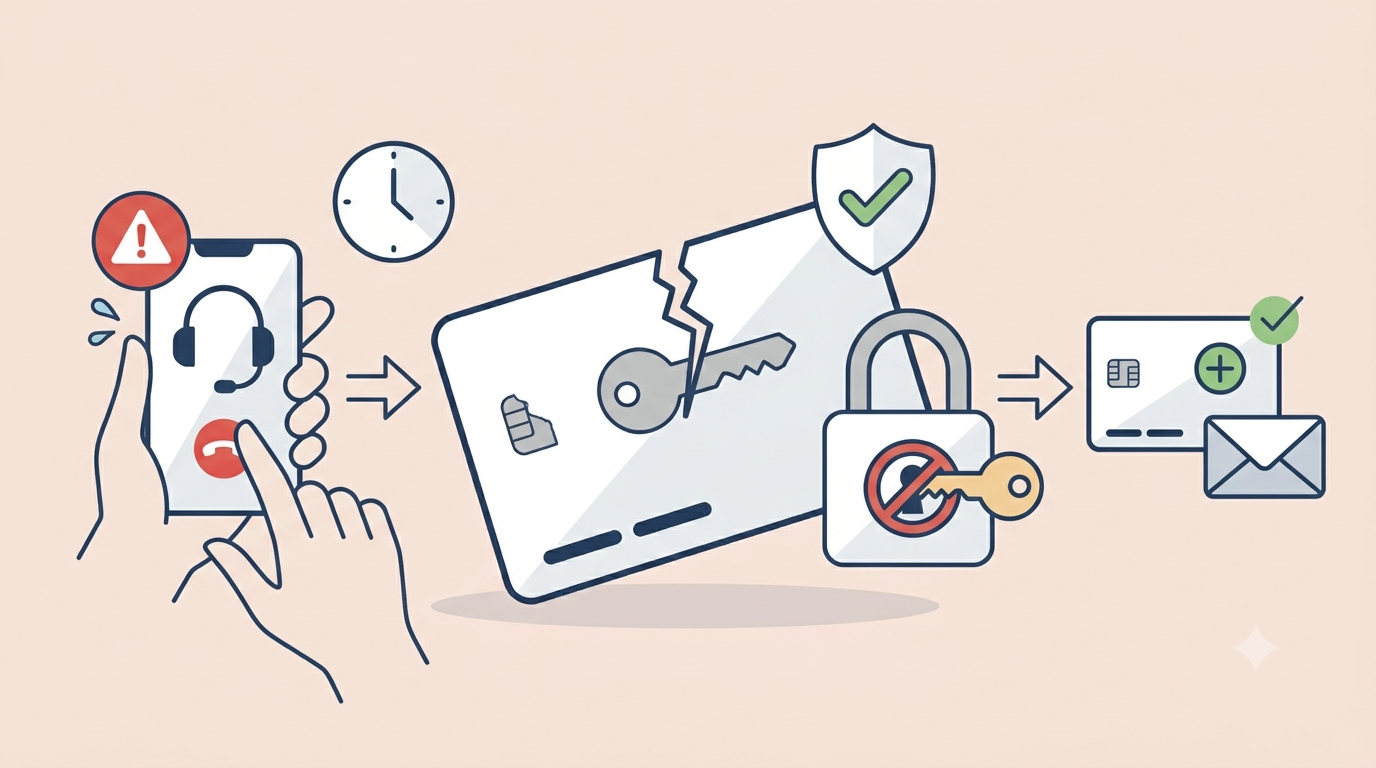
If your credit card is lost or stolen:
- Lock or freeze the card immediately through your issuer’s mobile app, if available.
- Contact the card issuer and report the card missing.
- Review recent transactions for unauthorized charges.
- Dispute any transactions you did not make.
- Request a replacement card and a new card number.
- Update recurring payments linked to the old card.
- Monitor your account and credit reports for suspicious activity.
Do not wait several days hoping the card will turn up. Even if you think you simply misplaced it, temporarily locking the card can be a safer first step.
1. Lock your credit card immediately if possible
Many credit card issuers allow cardholders to temporarily lock or freeze a card through a mobile app or online account.
This can be useful if you think the card may be somewhere nearby, such as:
- Your home.
- Your car.
- A restaurant.
- A store.
- A hotel.
- A friend’s house.
A temporary lock can give you time to look for the card without leaving the account completely unprotected.
However, a card lock is not necessarily the same thing as reporting the card permanently lost or stolen. If you believe someone took the card, contact the issuer and report the theft directly.
What if you find the card later?
If you only temporarily locked the card and later find it, you may be able to unlock it.
If you already reported the card lost or stolen and the issuer canceled it, you generally should not continue using that card. Wait for the replacement card and follow the issuer’s instructions.
2. Contact your credit card issuer right away
The next step is to contact the bank or credit union that issued your credit card.
You can usually do this through:
- The issuer’s mobile app.
- The customer service number.
- Your online account.
- A branch, if the issuer has physical locations.
Tell the issuer that your card is lost or stolen.
The issuer may:
- Cancel the old card.
- Issue a replacement card.
- Provide a new card number.
- Review recent transactions.
- Help you report unauthorized charges.
The Federal Trade Commission recommends reporting a lost or stolen credit card immediately and keeping records of when you noticed the card was missing and when you reported it.
Do not wait to report the card
One of the biggest mistakes people make after losing a card is waiting.
You may think:
“I probably left it somewhere. I’ll look for it tomorrow.”
That can create unnecessary risk.
If someone has the physical card, they may attempt to use it before you discover what happened.
Reporting the card quickly gives the issuer the opportunity to block further unauthorized use.
3. Check your account for unauthorized charges
After reporting the card, review your recent transactions.
Look for:
- Purchases you do not recognize.
- Small charges you did not make.
- Online transactions.
- Cash advances.
- Charges from unfamiliar merchants.
Do not assume that a small charge is harmless.
Fraudsters may sometimes test whether a card or account is active with a small transaction before attempting larger purchases. The Consumer Financial Protection Bureau recommends alerting your card provider immediately if you notice suspicious activity.
If you find a transaction you did not authorize, report it to the card issuer as soon as possible.
4. Dispute unauthorized credit card charges
If someone used your card without permission, tell the card issuer.
The issuer may ask you to:
- Identify the transaction.
- Confirm that you did not authorize it.
- Provide additional information about when the card went missing.
- Complete a fraud or dispute form.
You should keep records of:
- The date and time you reported the card missing.
- The date and time you contacted the issuer.
- The name or identification number of the representative, if available.
- Any confirmation numbers.
- Copies of written communications.
For billing disputes, the FTC recommends following up in writing and using the address designated for billing disputes when necessary.
How much are you responsible for?
Under federal law, if a credit card is lost or stolen and used without your permission, your liability is generally limited to the lesser of:
- $50, or
- The amount of unauthorized charges made before you notify the issuer.
If you report the card missing before it is used, you generally have no liability for unauthorized charges made afterward. If only your account number was stolen and the physical card was not lost or stolen, federal protections generally provide no liability for unauthorized use.
Your card issuer may also provide protections that are more generous than the legal minimum.
What to do if your credit card was stolen but no charges appear
If your card was stolen but you do not see any unauthorized charges, you should still report it immediately.
Do not wait until a fraudulent transaction appears.
The thief may not have used the card yet, or a transaction may not have appeared in your account.
The best approach is to:
- Report the card stolen.
- Have the issuer cancel the card.
- Request a replacement.
- Continue monitoring the account.
The absence of unauthorized charges does not necessarily mean the card is safe to continue using.
What to do if you lost your credit card but think you can find it
If you are not sure whether the card is permanently lost, you may be able to temporarily lock it through your issuer’s app.
This can be useful when:
- You think the card is at home.
- You may have left it in your car.
- You are retracing your steps.
- You are unsure whether someone took it.
However, if you believe the card was stolen, reporting it as lost or stolen is usually the safer option.
The inconvenience of replacing a card is generally much smaller than dealing with unauthorized transactions.
5. Request a replacement card
When you report the card missing, ask the issuer about getting a replacement.
The new card may have:
- A new card number.
- A new expiration date.
- A new security code.
Your account itself may remain open, but the old physical card should no longer be usable once it has been canceled.
Ask the issuer how long the replacement will take.
Some issuers may offer expedited delivery, although fees and availability can vary.
6. Update recurring payments linked to your old card
This is an easy step to forget.
If you use your credit card to pay for recurring services, the old card information may be stored with:
- Streaming services.
- Phone companies.
- Internet providers.
- Insurance companies.
- Gyms.
- Software subscriptions.
- Online memberships.
When you receive the replacement card, update the payment information for services connected to the old card.
Otherwise, an automatic payment may fail.
Some merchants or card networks may also receive updated card information through account updater services, but you should not assume that every recurring payment will update automatically.
7. Watch your credit card account after the card is replaced
Replacing the card is important, but you should continue monitoring the account.
Review:
- New transactions.
- Pending charges.
- Monthly statements.
- Account alerts.
- Changes to your contact information.
If you see a transaction you do not recognize, contact the issuer immediately.
It is also a good idea to enable notifications for:
- New purchases.
- Large transactions.
- Online purchases.
- International transactions.
- Changes to account information.
Real-time alerts can help you notice suspicious activity much sooner.
What if your wallet was stolen with your credit card?
If your entire wallet was stolen, the situation may be more serious than losing one credit card.
You may also need to protect:
- Your driver’s license.
- Your debit card.
- Your Social Security card.
- Health insurance cards.
- Identification documents.
Contact each relevant financial institution and report stolen payment cards.
If your Social Security number or other sensitive personal information may have been exposed, monitor your credit reports and consider additional identity theft protections.
The FTC recommends checking credit reports and using IdentityTheft.gov if you suspect identity theft.
Should you freeze your credit after losing a credit card?
Simply losing a credit card does not automatically mean that you need to freeze your credit.
A credit freeze may become more relevant if your wallet was stolen along with sensitive identification or if you believe someone may have access to enough personal information to open new accounts in your name.
A credit freeze can make it more difficult for someone to open new credit accounts using your identity.
You may also consider a fraud alert if you suspect identity theft.
The FTC recommends considering a fraud alert and reviewing your credit reports when personal information has been compromised.
Lost or stolen credit card vs. debit card: Why it matters
Credit cards and debit cards do not have identical protections.
With a credit card, federal law generally limits liability for unauthorized use to $50, and reporting the loss before unauthorized use generally eliminates liability for those later charges.
Debit card protections depend heavily on how quickly you report the loss. Waiting too long can significantly increase your potential liability.
For that reason, if both your credit card and debit card were stolen, contact both issuers immediately.
Do not assume that the rules are the same for both types of cards.
Can someone use a lost credit card without the PIN?
Yes.
A credit card can often be used for purchases without entering a PIN, depending on the transaction and merchant.
A thief may attempt to use the card:
- In stores.
- Online.
- Through contactless payments.
- For recurring transactions.
This is another reason to report a missing card quickly.
A PIN is not the only security feature protecting a credit card account.
What happens to your credit score when your credit card is replaced?
Replacing a lost or stolen credit card does not normally damage your credit score by itself.
The important distinction is whether the issuer:
- Replaces the card while keeping the same account, or
- Closes the account completely and opens a new account.
If the account remains open, the replacement generally does not create a new credit account simply because the physical card changed.
However, you should continue making any required payments on time.
A lost card does not eliminate your responsibility to make payments on the underlying account.
What if unauthorized charges appear after you report the card?
Contact the issuer again immediately.
Do not assume that a transaction is legitimate simply because it appeared after you first reported the card missing.
Explain the situation and identify the transaction.
The issuer can tell you what documentation or dispute process applies.
Keep your records from the original report because the timing of your notification may be relevant.
What to do if your credit card is lost or stolen while traveling
If you lose your card while traveling:
- Lock the card through your app if possible.
- Contact the issuer immediately.
- Report the card lost or stolen.
- Ask about emergency replacement options.
- Check your account for unauthorized transactions.
- Use a backup payment method if available.
It can be useful to travel with more than one payment method.
For example, keeping a backup card separately from your primary wallet may give you another way to pay if your main card disappears.
You can also learn more about travel-friendly cards in our guide to Best Credit Cards With No Foreign Transaction Fees.
Common mistakes after losing a credit card
Waiting to report it
The longer you wait, the longer someone may have an opportunity to use the card.
Assuming a small charge is not fraud
A small unfamiliar charge should still be investigated.
Forgetting recurring payments
A replacement card may require you to update subscriptions and automatic payments.
Ignoring your credit reports
If more than your card was stolen, personal information may also be at risk.
Canceling every account unnecessarily
If the physical card was lost but your account remains secure, the issuer may be able to replace the card without closing the entire credit account.
Ask the issuer what will happen to your account before requesting a complete account closure.
How to prevent problems if your credit card is lost or stolen
You cannot completely eliminate the risk of losing a card, but you can make the situation easier to manage.
Turn on transaction alerts
Notifications can help you identify unauthorized activity quickly.
Save your issuer’s contact information
Store the customer service number in your phone.
You may also want to keep it somewhere secure outside your phone.
Use your issuer’s mobile app
Many apps allow you to lock a card quickly.
Avoid carrying every card
If your entire wallet is stolen, carrying fewer cards can limit the number of accounts you need to protect.
Keep an emergency payment method
A backup card stored separately can be useful during travel or emergencies.
What to Do If Your Credit Card Is Lost or Stolen: Final Verdict
Knowing what to do if your credit card is lost or stolen can help limit the potential damage.
The most important step is to contact the card issuer immediately. If your issuer offers a temporary card lock, you can use it when you believe the card is misplaced. If you believe someone stole the card, report it as lost or stolen and request a replacement.
After that, review your transactions carefully, dispute any unauthorized charges and monitor the account for additional suspicious activity.
If your wallet was stolen along with identification or other sensitive personal information, take additional steps to protect yourself against identity theft.
The key takeaway is simple: do not wait to report a missing credit card. Acting quickly is one of the most effective ways to reduce the risk of unauthorized use.
Frequently Asked Questions
What should I do first if my credit card is lost?
The first step is to lock or freeze the card through your issuer’s app if that option is available. Then contact the issuer and report the card as lost as soon as possible.
What should I do if my credit card is stolen?
Contact your credit card issuer immediately, report the card stolen and request a replacement. You should also review your account for unauthorized transactions.
Am I responsible for charges made on a stolen credit card?
Federal law generally limits your liability for unauthorized credit card use to the lesser of $50 or the amount charged before you notify the issuer. If you report the card before it is used, you generally have no liability for unauthorized charges made afterward.
Can I temporarily freeze a lost credit card?
Many issuers offer a temporary lock or freeze feature through their mobile app. This can be useful if you think you may find the card. If you believe it was stolen, contact the issuer and report it.
Will replacing a stolen credit card hurt my credit score?
Replacing the physical card generally does not hurt your credit score if the underlying credit account remains open. Continue making payments on time.
Should I cancel my credit card if it is lost?
You should contact the issuer and ask about the available options. The issuer may cancel the card number and issue a replacement without closing the underlying account.
What if I find my credit card after reporting it stolen?
Do not assume the card is still usable. Once an issuer has canceled the card, it may no longer work. Follow the issuer’s instructions and use the replacement card.
Should I freeze my credit after my wallet is stolen?
A credit freeze may be worth considering if your wallet contained sensitive personal information and you are concerned that someone could open new accounts in your name. Monitor your credit reports and consider identity theft protections if appropriate.
What happens to subscriptions after my credit card is replaced?
Recurring payments connected to the old card may fail unless the merchant receives updated card information. Review your subscriptions and update the payment details when you receive the replacement card.
Keep Reading
- Best Credit Cards With No Foreign Transaction Fees
- What Is APR on a Credit Card and How Is It Calculated?
- What Is Revolving Credit and How Does It Affect Your Credit Score?
- Best Credit Cards for Earning Airline Miles and Points
- Chase Sapphire Preferred Review: Is It Worth the Annual Fee?
Editorial note: Credit card protections, issuer policies and dispute procedures can vary. Federal liability rules and card issuer terms may change, so review your card agreement and contact your issuer for instructions specific to your account. This article is for informational purposes only and does not constitute personalized financial advice.